

A full-time housekeeper costs $2,500 to $6,000 per month for most American households.
However, high-net-worth families often pay $75,000 to $128,000 annually for experienced domestic staff in private homes.
These figures represent more than just wages. They include household staff payroll taxes, workers' compensation insurance, and potential benefits packages.
Full time house staff represent a significant long term investment. Smart families approach this decision with the same rigor they apply to other major financial commitments.
This guide walks you through every aspect of hiring household staff. You will learn about costs, tax obligations, legal requirements, and strategic hiring practices.
Understanding the True Cost of Household Staff
The full-time housekeeper cost varies dramatically based on location, experience, and job scope. Major metropolitan areas like New York, Los Angeles, and Miami command premium rates.
A recent Morgan Stanley and Botoff Consulting survey found that the average total cash salary for housekeepers in HNW households reaches $77,913 annually. Executive housekeepers earn even more, averaging $95,041 per year with top-tier candidates commanding well over six figures.
What Does a Full-Time Housekeeper Cost Per Month?
Here's what you need to know:
Monthly costs for a full-time, live-out housekeeper typically range from $3,200 to $5,500. This depends on your location and the candidate's experience level.
While general labor data suggests a national average hourly rate around $17.00 per hour, HNW families should expect to pay significantly more. Private service professionals in this sector typically start at $30 to $45 per hour.
Monthly Cost Ranges for Live-In Housekeepers
Live-in housekeepers generally cost between $3,000 to $6,000 per month in salary alone. You must add the value of room and board to this figure.
Annual salaries for live-in positions range from $45,000 to $80,000 for experienced candidates. However, strictly transactional live-in arrangements are becoming less common in favor of higher-salary live-out roles.
Live-in arrangements require you to provide accommodations, meals, and often additional benefits. It is important to note that under the Fair Labor Standards Act (FLSA), room and board cannot always be deducted from minimum wage calculations, so professional advice is recommended.
Hourly Rate Variations by Market
Hourly rates range from $25 to $80 depending on specialization and market. While commercial cleaning averages $20 per hour, standard private housekeeping in most affluent areas falls between $30 and $45 per hour.
Luxury estate positions command premium rates. Executive housekeepers in high-cost markets can earn $50 to $65 or more per hour.
Regarding market averages, general data often conflates hotel staff with private service. In the private sector, New York City and San Francisco consistently command the highest salaries, with total compensation packages often exceeding $100,000.
Full-Time Housekeeper Cost Comparison
Key Cost Factors That Affect Your Budget
Home Size and Square Footage
Larger homes require more labor hours, often necessitating multiple staff members rather than a single hire. This directly increases your annual payroll obligation.
- Staffing Ratios: Industry standards typically recommend one full-time housekeeper per 3,000 to 5,000 square feet to maintain luxury standards.
- Deep Cleaning Impact: Homes exceeding 10,000 square feet often require a team approach, with an Executive Housekeeper managing junior staff to ensure consistent coverage.
Scope of Services
Standard cleaning costs less than specialized care for fine art, antiques, and couture. Candidates with museum-quality cleaning skills command premiums of 20% to 40% over base salaries.
- Standard Housekeeping: Focuses on sanitary maintenance and basic tidying.
- Specialized Care: Includes silver polishing, crystal care, and handling delicate fabrics. These skills require experienced professionals who earn $35 to $55+ per hour in private service.
Frequency of Service
Weekly service is a vendor expense; daily coverage is a payroll expense. Full-time positions provide the most consistent coverage but come with overtime considerations.
- Part-Time Staff: Typically cost $35 to $50 per hour for high-end private service, often without benefits.
- Full-Time Coverage: Provides better value for large estates but requires adherence to FLSA overtime rules if hours exceed 40 per week.
Additional Duties Beyond Basic Cleaning
Extended duties like wardrobe management, vendor supervision, and pet care transform the role from "Housekeeper" to "House Manager/PA," increasing market value.
- Hybrid Roles: Adding cooking or childcare duties often pushes annual compensation above $90,000 to $120,000.
- Management: Private homes with complex needs require a House Manager. These roles command significantly higher salaries, often starting at $125,000 annually.
Common Duties and Service Expectations
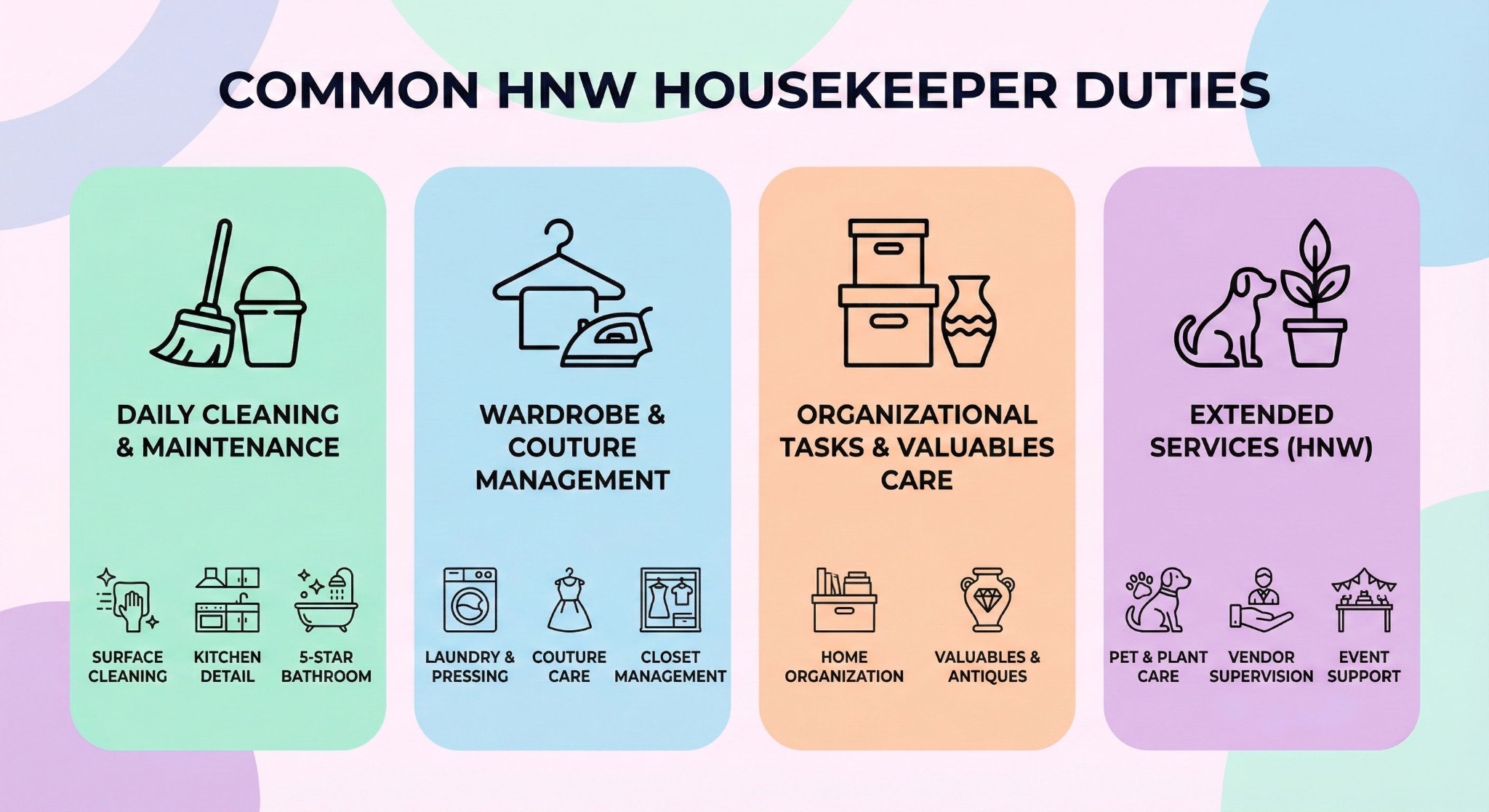
Understanding standard duties helps you define clear expectations. In the luxury sector, the "standard" goes far beyond basic sanitation.
What Does a Full-Time Housekeeper Do Each Day?
Daily cleaning encompasses sweeping, mopping, vacuuming, and maintaining all living spaces. However, in a private residence, discretion and "invisible service" are just as important as the cleaning itself.
- Kitchen Maintenance: Includes detailed appliance cleaning, polishing stone countertops, and managing pantry inventory.
- Bathroom Sanitization: Professional housekeepers maintain 5-star hotel standards, ensuring fixtures are polished and toiletries are restocked daily.
Wardrobe and Couture Management
Unlike standard laundry services, HNW housekeepers are often trained in garment care.
- Laundry Services: Includes washing, steaming, and ironing.
- Couture Care: Hand-washing delicate fabrics, managing dry cleaning vendors, and organizing closets by season or color.
Organizational Tasks & Valuables Care
- Organization: maintaining order in closets, pantries, and children's areas.
- Valuables: Proper dusting and care of fine art, antiques, and silver requires specific knowledge of pH-balanced products to avoid damage.
Extended Services for HNW Households
Extended services may include pet care, plant maintenance, and informal meal preparation.
- Vendor Management: Senior housekeepers often supervise repair crews, florists, and contractors to ensure security and quality control.
- Event Support: Domestic staff in luxury estates often assist with event setup and service. Note: For formal dining, specialized caterers or private chefs are usually recommended over general housekeeping staff.
The Hidden Costs: Legal and Tax Obligations
The answer is: hiring household staff creates employer responsibilities that many families underestimate.
Paying cash wages without proper documentation exposes you to significant legal and financial risk. The IRS takes household employment taxes seriously.
Understanding Your Employer Responsibilities
When you hire a full time housekeeper, you become a household employer. This triggers specific tax and legal obligations.
Employee vs. Independent Contractor Classification
Classification matters greatly. The IRS determines status based on behavioral control, financial control, and relationship type.
- Employee Status: Most full-time housekeepers qualify as employees, not independent contractors. You control their schedule, methods, and workspace.
- Risks: Misclassifying employees as independent contractors carries serious consequences. You could face back taxes, penalties, and interest charges.
Household Staff Payroll Taxes
Here's what you need to know about payroll taxes:
For 2025, you must withhold and pay FICA tax if cash wages reach $2,800. This threshold triggers Social Security and Medicare tax obligations.
- FICA: You must withhold 6.2% for Social Security tax and 1.45% for Medicare tax from employee wages. You pay a matching 7.65% as the employer.
- FUTA: Federal unemployment tax applies if you pay $1,000 or more in any calendar quarter. The FUTA rate is 6% on the first $7,000 of wages per employee. However, you generally receive a credit of 5.4% for paying state unemployment taxes, lowering the effective federal rate to 0.6%.
- Income Tax: You are not required to withhold federal income tax. However, many employees request this service for convenience.
2025 Household Employment Tax Requirements
Source: IRS Publication 926, Household Employer's Tax Guide
Workers' Compensation Insurance
Workers' compensation insurance protects both you and your household staff member. Requirements vary significantly by state.
- California: Requires coverage for any domestic worker employed 52 or more hours in a 90-day period or who earns $100 or more.
- New York: Mandates coverage for domestic workers employed 40 or more hours weekly.
A typical workers' compensation policy costs $500 to $900 annually. This small investment protects against potentially catastrophic liability for workplace injuries.
Potential Benefits Packages
Some full-time household staff arrangements include benefits like health insurance or paid time off. UHNW families often provide comprehensive packages.
- Standard Perks: Live-in positions typically include meals, housing, and vehicle access.
- Retention: These benefits help attract and retain quality domestic staff in a competitive market.
Working with Professional Staffing Agencies
A private household staffing agency can help navigate legal complexities. These agencies add cost but reduce risk significantly.
Top agencies like Morgan & Mallet International or British American Household Staffing specialize in HNW and UHNW household placements. They maintain extensive networks of vetted professionals.
Agency services include background checks, reference verification, and compliance guidance. Many also offer payroll services to simplify administration.
Strategic Hiring: Finding the Right Fit for Your Household
The hiring household staff process requires careful planning. The right approach saves time, money, and frustration.
How Do I Define My Household's Specific Needs?
Start by defining your household's specific needs. Create a detailed task list before beginning your search to determine if you need a "housekeeper," a "house manager," or a hybrid of both.
Determine your preferred employment type: full-time, part-time, live-in, or live-out. Your lifestyle and property requirements guide this decision.
Live-In vs Live-Out Housekeeper: Which Is Right for You?
Here's what you need to know about each arrangement:
- Live-in housekeepers offer maximum flexibility for overnight coverage and emergencies. They suit households with unpredictable schedules, frequent travel, or multiple properties.
- Live-out housekeepers maintain professional boundaries with defined working hours. They work well for families who value privacy during evenings and weekends.
Live-In vs Live-Out Housekeeper Comparison
Utilizing Trusted Recruitment Sources
Use professional staffing agencies that vet candidates and verify references. Quality agencies like British American Household Staffing or Pavilion Agency specialize in domestic staff placements for HNW families.
Top agencies conduct thorough background checks and in-depth interviews. They assess skills, experience, and personality fit before presenting candidates, saving you dozens of hours in screening time.
Conducting Thorough Interviews
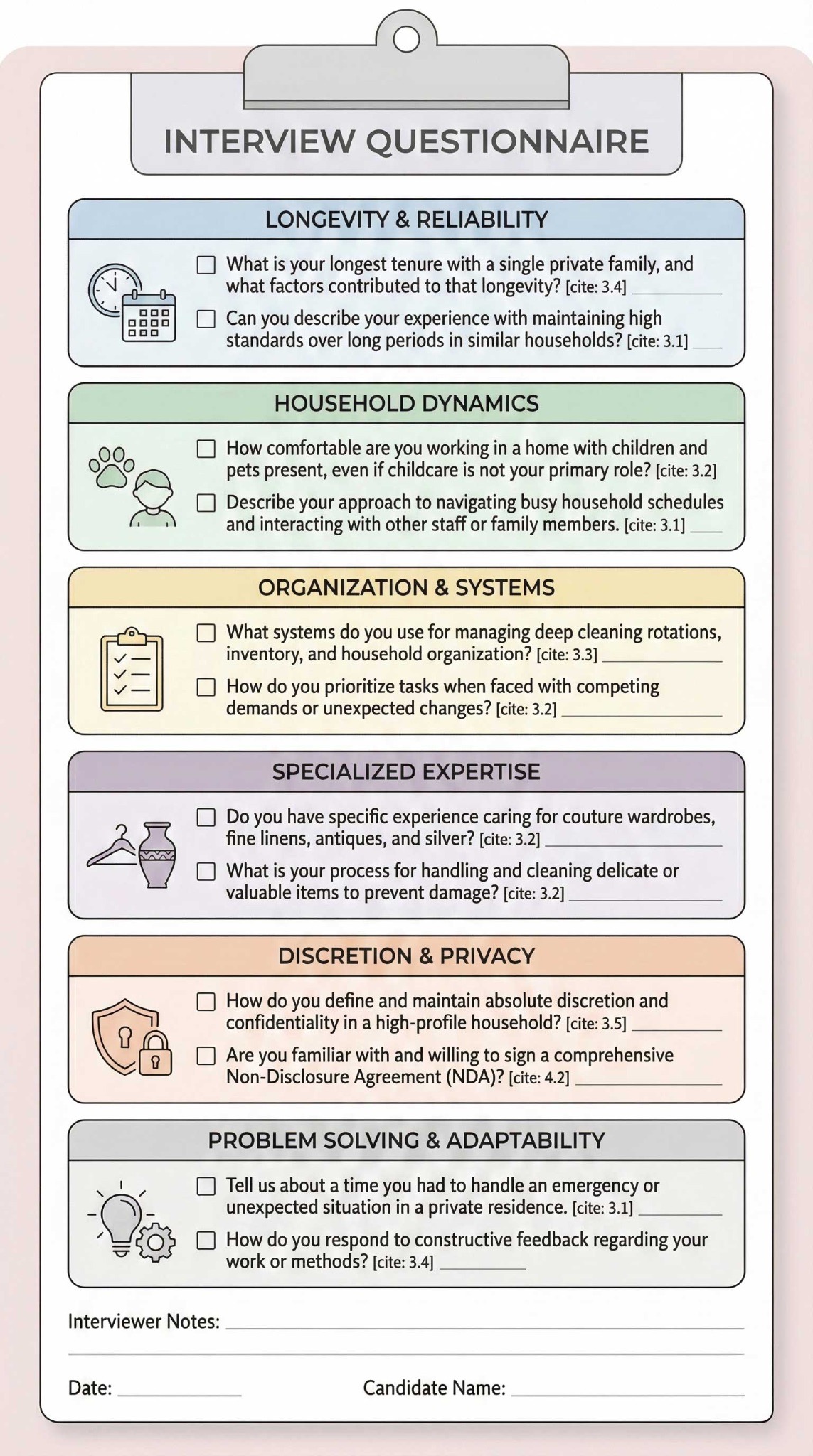
The interview process reveals critical information about potential hires. Prepare thoughtful questions that assess both skills and cultural fit.
Essential interview topics include:
- Experience: Ask candidates about their tenure in similar HNW households - longevity with past employers is a key indicator of reliability.
- Pet & Child Interaction: Confirm the candidate's comfort level with pets or children, even if childcare isn't their primary role.
- Organization: Learn how candidates approach organization, inventory management, and deep cleaning rotations.
- Specialized Skills: Discuss their experience with fine fabrics (couture), silver polishing, antiques, and marble care.
- Discretion: Assess their understanding of privacy expectations and non-disclosure agreements (NDAs).
Verifying References and Background Checks
Always verify references and conduct comprehensive background checks. This provides security and peace of mind for your family.
Do not rely solely on written letters. Speak directly with previous employers about job performance, reliability, and character. Ask specific questions: "Would you hire this person again?" and "How did they handle constructive feedback?"
Finalizing Employment with a Written Agreement
Finalize employment with a written work agreement outlining scope, schedule, compensation, and house rules. This document protects both parties and prevents "scope creep."
Your employment agreement should include:
- Detailed job responsibilities and standards of care.
- Work schedule, break times, and overtime policies.
- Compensation structure, payment schedule, and tax withholding details.
- Benefits including paid time off, health insurance, and housing terms (if live-in).
- Termination conditions, notice requirements, and severance policies.
- Confidentiality, social media, and privacy provisions.
Managing Your Complete Financial Picture with Kubera
Kubera serves as your personal balance sheet.

Designed for high-net-worth individuals, global citizens, and professionals managing complex financial portfolios, Kubera provides the visibility you need.
- Track Everything: Monitor all your assets in one secure platform: bank accounts, investment accounts, real estate, crypto across multiple chains, and the alternative assets that diversify your modern portfolio.
- Global Aggregation: Gain visibility into your complete financial situation by aggregating accounts from multiple countries and institutions, ensuring accurate portfolio valuation for complex households.
- Secure Document Storage: Store important documents securely, including household staff employment agreements, tax records (Schedule H), and insurance policies. Keep everything organized in one place.
- Safe Collaboration: Purpose-built sharing controls allow you to collaborate with your accountant, family members, or financial advisor while maintaining strict privacy.
Unlike basic spreadsheets, Kubera automatically updates account values. You get a real-time view of your complete financial picture.
Get Started with Kubera
Ready to take control of your wealth management? Start tracking your complete financial picture, including household expenses and all your assets, with Kubera today.
Sign up for Kubera and simplify your financial life.
Frequently Asked Questions
How much does a full-time housekeeper cost per year?
Standard private service roles typically range from $50,000 to $80,000. However, experienced staff in HNW households often command **$95,000 to $130,000+** annually, plus benefits.
Do I need to pay taxes for a household employee?
Yes. You must withhold and pay Social Security and Medicare taxes if cash wages reach $2,800 in 2025. Federal unemployment tax (FUTA) applies when quarterly wages exceed $1,000.
What is the difference between a housekeeper and a house manager?
A housekeeper focuses on deep cleaning and fine surface care. A House Manager acts as an administrator - overseeing vendors, managing the budget, supervising staff, and handling complex logistics.
Should I hire through a staffing agency?
Agencies are highly recommended for high-net-worth families. They handle the rigorous vetting, background checks, and contract negotiations, adding cost but significantly reducing security risks.
Is a live-in or live-out housekeeper better?
Live-in provides flexibility for frequent travelers but sacrifices privacy. Live-out offers a clearer boundary between employer and employee, often leading to higher long-term retention.
What workers' compensation coverage do I need?
Requirements vary by state. California and New York mandate coverage for domestic workers meeting specific hour thresholds. Policies typically cost $500 to $900 annually and protect you from lawsuits.
Can I classify my housekeeper as an independent contractor?
Rarely. The IRS classifies most household workers as employees because you control their schedule and methods. Misclassification carries significant penalties and back-tax liabilities.
Conclusion
Hiring a full-time housekeeper represents a significant investment for HNW families. The true cost extends beyond the base salary to include payroll taxes, insurance, and comprehensive benefits.
Understanding your obligations as an employer protects your family from legal and financial risk. By working with reputable agencies and maintaining proper documentation, you ensure a professional relationship that provides invaluable support and peace of mind.


